

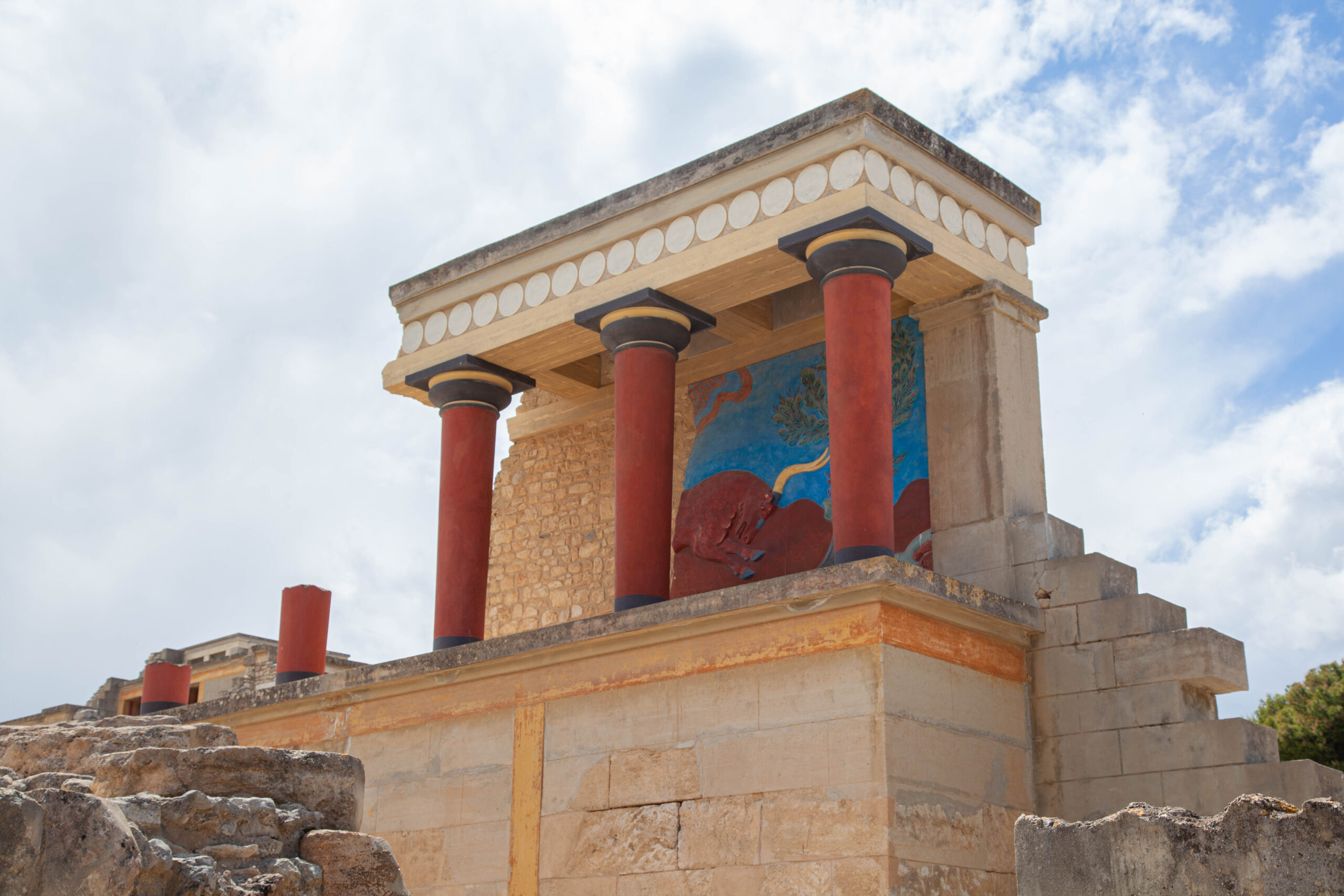

Knossos Palace, located near the modern city of Heraklion on the island of Crete, Greece, is a symbol of the ancient Minoan civilization and one of the most significant archaeological sites in the Aegean region. Believed to be the political and ceremonial center of the Minoan civilization, Knossos is a complex of interconnecting structures built around 1900 BC and is often associated with King Minos and the Minotaur myth from Greek mythology.

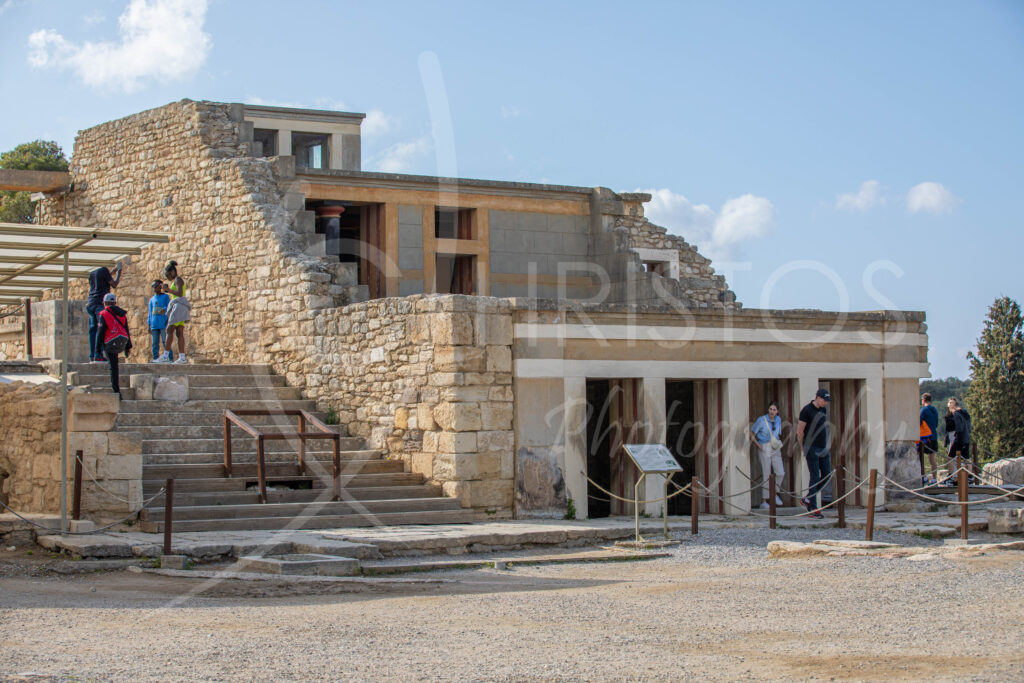
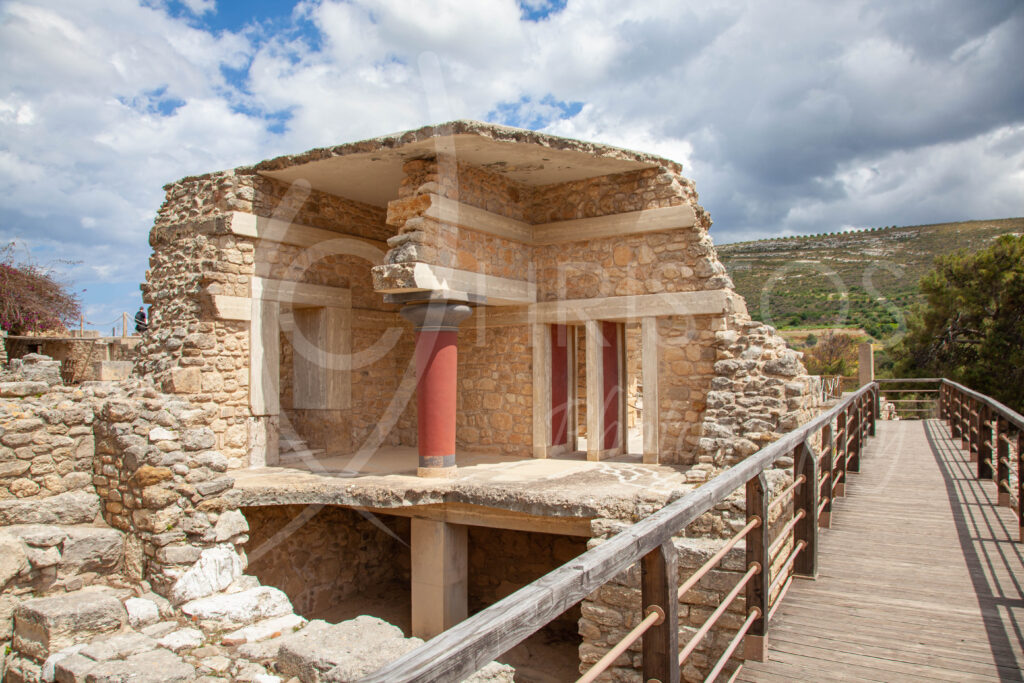
Discovered and partially reconstructed by British archaeologist Sir Arthur Evans in the early 20th century, Knossos provides a fascinating glimpse into the sophistication of Minoan culture. The palace covers a vast area and is characterized by labyrinthine corridors, multi-story buildings, and rooms with vivid frescoes depicting scenes from daily life, religious rituals, and mythical motifs.
The Throne Room, with its alabaster throne and griffins fresco, is one of the most iconic chambers in Knossos. The Grand Staircase, the Queen’s Megaron, and the Storage Magazines are among the other noteworthy features of the palace. The architecture showcases advanced engineering for its time, with features like light wells and an advanced plumbing system.
Exploring Knossos allows visitors to appreciate the intricate layout of the palace, which is believed to have served various purposes, including administrative, religious, and residential functions. The site’s historical and cultural significance has made it a UNESCO World Heritage Site, attracting history enthusiasts, archaeologists, and curious travelers from around the world.
While some areas are reconstructions based on Evans’ interpretations, Knossos Palace remains a key archaeological site, offering a captivating journey into the mysteries of the Minoan civilization and its impact on the history of ancient Greece.